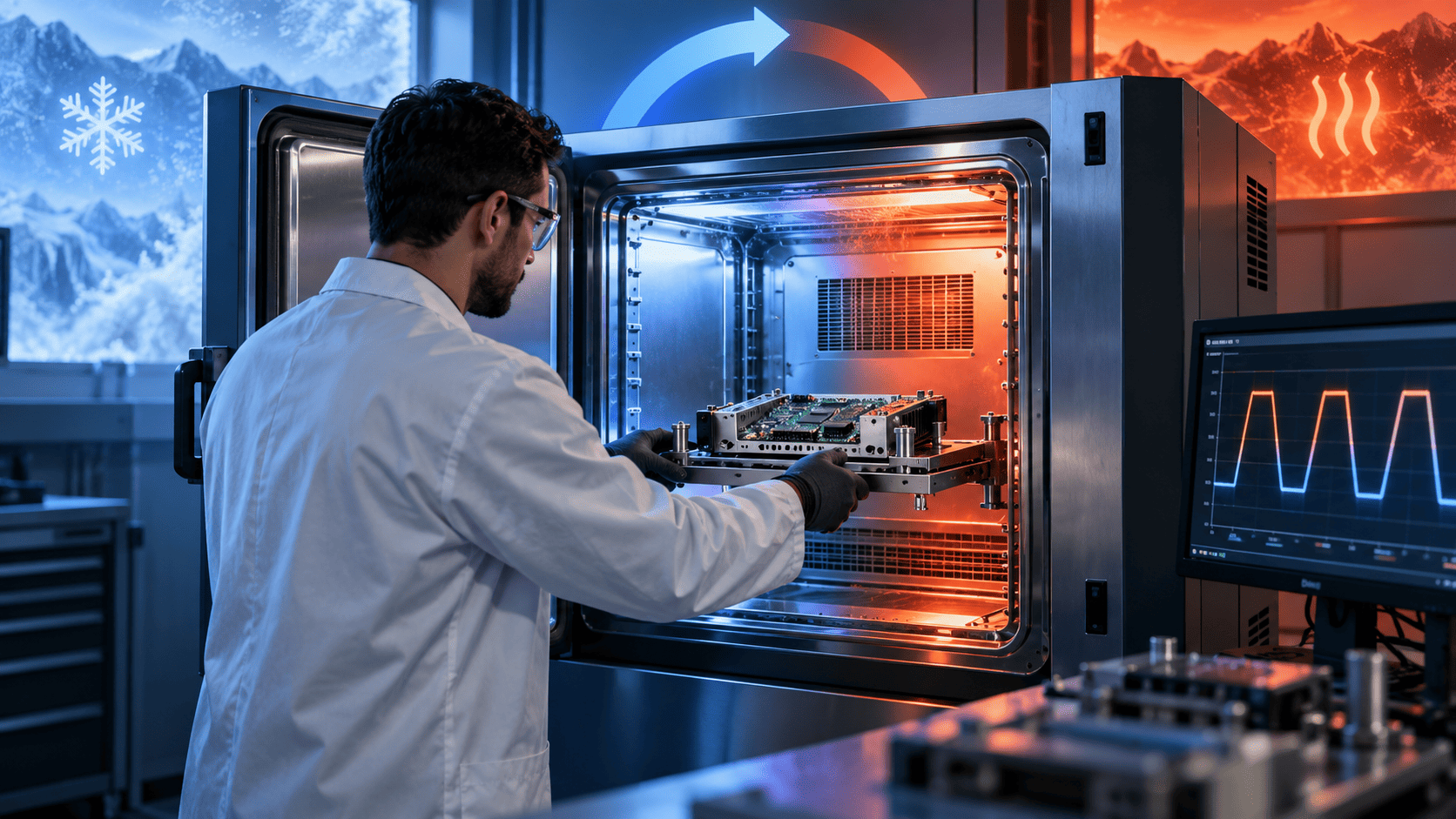
MSASPL provides thermal / Temperature cycling testing for electronic products, PCB assemblies, modules, sensors, EV components, IoT devices and industrial systems. Repeated movement between defined hot and cold conditions helps engineering teams evaluate reliability, material stability and product behaviour under changing environmental conditions.
What is thermal cycling
Testing?
Thermal/ Temperature cycling exposes a product to repeated temperature transitions between defined high and low levels. The test can be configured around the required temperature limits, transition/ramp method, dwell periods, number of cycles and DUT operating state.
Why manufacturers use
thermal cycling
Products exposed to daily, seasonal or process-related temperature changes experience repeated expansion and contraction. Cycling can reveal weaknesses that may not appear during a single hot or cold exposure.
Failures and behaviours
commonly investigated
Suitable products and applications
How MSASPL can structure the evaluation
Standards and test-plan
reference
Where applicable, thermal cycling may reference IEC 60068-2-14:2023, Environmental testing – Part 2-14: Tests – Test N: Change of temperature. The specific method (for example gradual or rapid change) must match the chamber/test setup capability and the customer requirement.
Frequently Asked Questions