
Conducted Emissions Testing

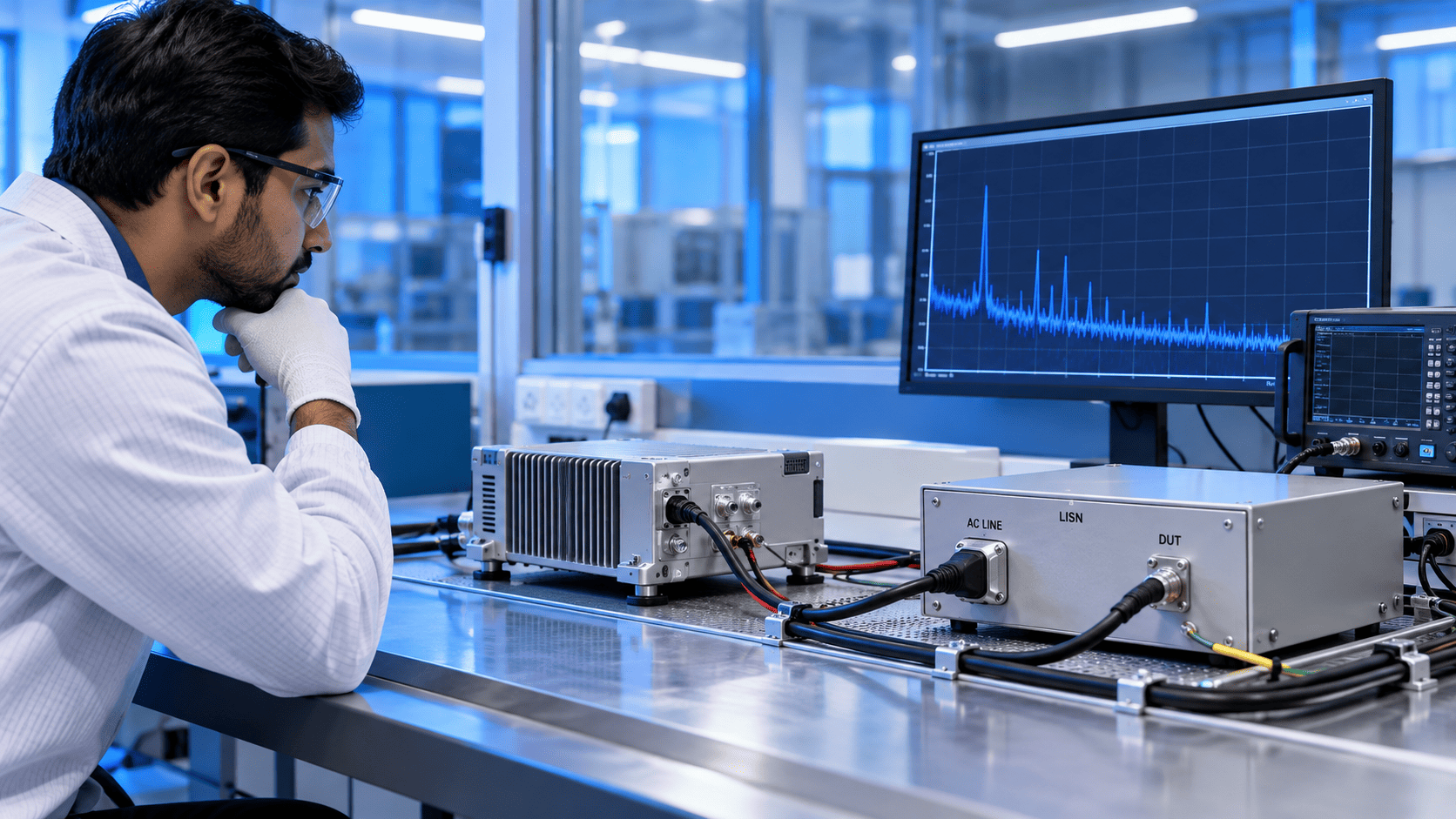
MSASPL provides conducted emissions testing to identify unwanted electromagnetic noise generated by electronic products and transmitted through power lines. High conducted emissions can lead to EMC certification failure and may disturb nearby equipment.

Conducted emissions pre-scan testing helps manufacturers understand whether their product is likely to meet emissions limits before submission to a formal certification laboratory.

Why Conducted Emissions Testing is Required ?

Switching power supplies, digital circuits, motor drives and high-frequency electronics can generate electrical noise that travels through power cables.


Common Causes of Conducted Emissions Failure

Output from the Test

Customers receive test observations, measurement data where applicable, setup photographs and practical debug guidance.


Frequently Asked Questions

Conducted emissions testing measures unwanted RF noise generated by a product and conducted back onto its power lines. The measured spectrum is compared with the applicable limit when a product standard and limit are defined.
A Line Impedance Stabilization Network provides a defined impedance to the DUT and a measurement path for RF noise. It also helps isolate the measurement from variations in the external power network.
Common contributors include switching power supplies, DC-DC converters, fast digital switching, poor grounding, insufficient input filtering, cable coupling and common-mode current paths.
Yes. By comparing ambient, power-supply and DUT conditions and reviewing frequency-related changes, the team can narrow likely noise sources and discuss filters, grounding, cable routing or circuit areas for engineering investigation.
No. A meaningful compliance decision requires the correct product standard, detector, bandwidth, limit line, setup and accredited certification process where applicable. MSASPL's measurements are intended to support engineering evaluation and readiness.
Live Chat WhatsApp
LIVE